


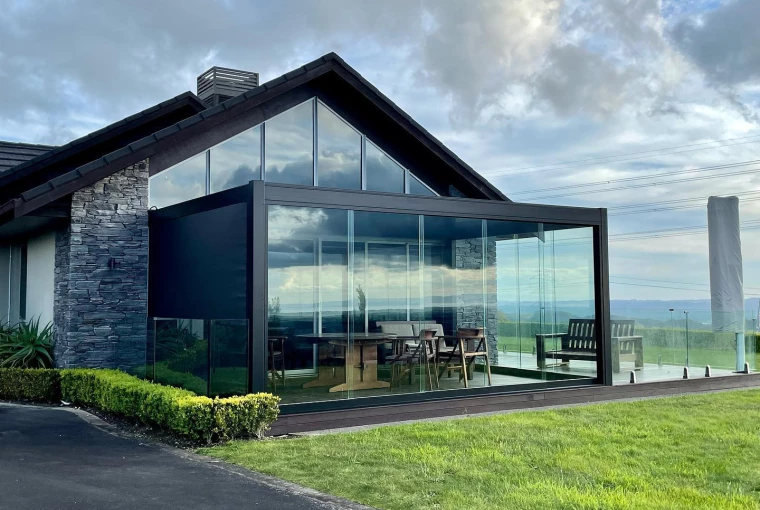
Louvre roofs are becoming increasingly popular across New Zealand, and homeowners are faced with multiple choices of systems with varying features and benefits. Different systems promote different specifications, features and performance claims. The challenge is that one impressive number, specification, or headline rarely tells the whole story. A louvre roof is a significant investment in your home. When carefully considered, it can transform an outdoor area into a more versatile extension of your living space, giving you greater flexibility to enjoy indoor-outdoor living throughout the year.
A louvre roof is a coordinated outdoor-living solution. Its suitability depends on much more than one component or performance figure. The location of your property, the site's exposure, the design and configuration of the roof, its engineering, installation and the support behind the product can all contribute to how suitable the finished project outcome is for your home.
That’s why a meaningful comparison starts by looking beyond the sales pitch
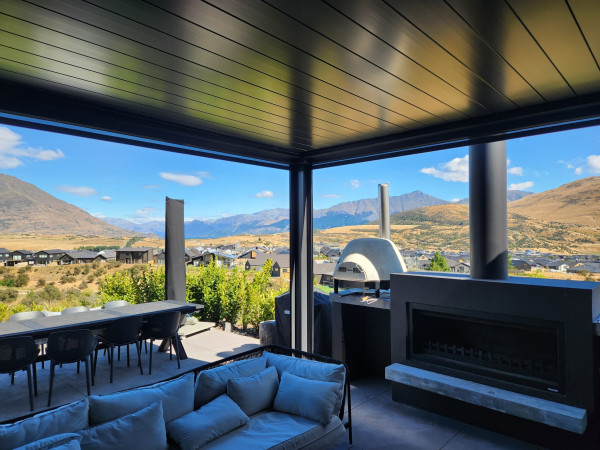
A High Wind-Speed Rating Sounds Impressive. But Is It Relevant?
When comparing louvre roofs, you may come across claims such as “rated to 100 km/h”. It sounds impressive, and it’s easy to assume that this number means a strong and suitable roof. But there’s an important distinction to understand first: a wind-speed rating is not the same as a wind zone, and a standalone wind-speed figure is not a measure of NZBC compliance. While a wind-speed rating can be useful, it is important to understand what the figure represents. In New Zealand, building compliance is generally assessed using wind zones and design actions rather than a single wind-speed number. For example, NZS 3604 Low Wind Zone construction is based on site wind speeds of approximately 115 km/h and above, with higher wind zones requiring progressively greater structural performance. Your site wind zone on the property file or building consent documents is more relevant than a simple km/h figure. Information about the relationship between wind zones and site wind speeds is available from https://www.branz.co.nz/design-build/articles/wind-pressure-101
A wind-speed rating is a performance claim about a product, component or roof configuration under certain conditions. What it doesn’t tell you on its own is whether that roof is suitable for your home, your site and your specific installation. A wind-speed rating doesn't tell you what engineering or design standard sits behind the figure, what size and configuration of roof was assessed, how the structure was supported or fixed, or whether the rating applies to an individual component or the finished project outcome.
On the other hand, a wind zone relates to the design wind pressure a building must resist on a specific site and, in the New Zealand Building Code, is classified from Low through to Extra High. It’s determined by where your home is located, how exposed it is, and the surrounding terrain and topography, all of which affect the wind forces a structure may need to withstand. This is why comparing a wind-speed rating directly with a property's wind zone can be misleading, as they are not interchangeable measures.
What does that mean for your home?
Most importantly, a wind-speed rating on its own does not provide enough information to determine whether a louvre roof will meet the New Zealand Building Code requirements applicable to your project. So rather than simply asking, “What wind speed is this louvre roof rated to?”, a more important question is: “Will this louvre roof be appropriately engineered for my site, environmental conditions and the configuration I’m having installed?”
A wind-speed rating can provide useful performance information when there is clear engineering and context behind it. But the most impressive number isn’t always the most relevant. What is more important is whether the entire outdoor-living solution has been appropriately designed and engineered for the conditions of your property to meet New Zealand Building Code and compliance requirements.
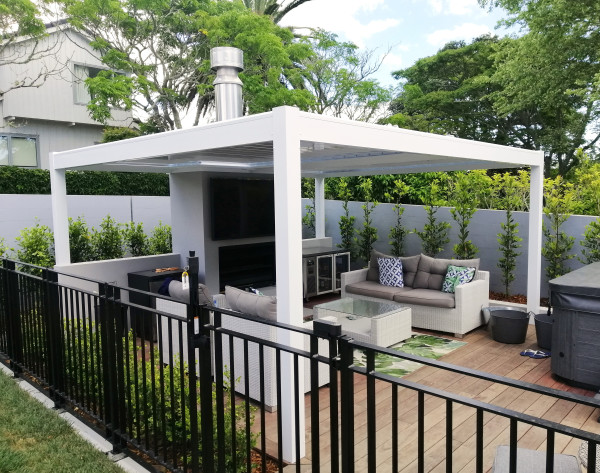
Low Maintenance vs Maintenance-Free: Know the Difference
“Maintenance-free” is understandably one of the most attractive promises in the outdoor living industry. For homeowners, it suggests a product can be installed, enjoyed and forgotten about. But before taking that claim at face value, it’s worth asking a simple question:
Can an outdoor structure that is permanently exposed to the New Zealand environment ever require no maintenance at all?
A louvre roof lives and operates outside year-round. Depending on where you live, it can be exposed to wind, heavy rain, strong UV, airborne dirt and debris, coastal salt and low winter temperatures. Unlike a static structure, a motorised louvre roof also incorporates several components that work together, including moving blades, mechanisms, motors and hidden drainage.
That doesn’t mean a quality louvre roof should be difficult or expensive to maintain. Quite the opposite. A well-designed system should be engineered to minimise the amount of ongoing care required. However, “low maintenance” and “maintenance-free” are not necessarily the same thing.
Keeping the system clean and following the recommended care and maintenance guidance can help keep the roof looking its best and operating as intended. Maintenance is also about more than appearance. A louvre roof is a unified outdoor-living solution. Giving appropriate attention to its moving components, drainage areas and overall condition provides an opportunity to identify anything that may need attention before it becomes a larger issue.
Better on Paper, or Better for Your Home?
Terms such as “best”, “strongest” and “most advanced” are powerful sales messages, and superlatives are everywhere in marketing. They can sound impressive in isolation, simple, memorable and make complicated product comparisons feel black and white. If one product is the “strongest”, it’s easy to assume it must be the better choice.
But a superlative is only as meaningful as the comparison behind it. Strongest at what? Best according to which measure? Most advanced in what area? A louvre roof promoted as the “strongest”, for example, may be referring to one component, one engineering specification or one test, but it doesn’t explain whether that measurement will make a meaningful difference to your home.
Superlatives can turn one point of difference into a statement that sounds much bigger and more definitive than the comparison itself. The same applies to words like “best” and “most advanced”. Without knowing the criteria behind them, they don’t tell you everything you need to know to make an informed comparison.
It’s important to ask what sits behind these claims. What exactly has been compared? Is there technical information to support it? And does it provide a real-world benefit for your installation?
Your home, location, design and weather exposure all influence which features matter most. A specification that allows one product to claim “strongest” on paper may not be the specification that matters most for your project.
Superlatives make great headlines, but meaningful comparisons need context.
Compare the Solution, not a Single Feature. It’s easy to compare louvre roofs by focusing on one standout specification: the biggest blade, strongest component, newest technology or boldest warranty statement.
But you’re not buying one feature. You’re investing in an integrated outdoor-living solution. Every part of the solution needs to work together, from the blades, frame and structural components to drainage, automation, installation and integration with your home. A strong result in one area doesn’t tell you how well the whole-project solution will perform, look or function over time.
So, when comparing louvre roofs, step back from the individual headline claims and look at the entire outdoor-living solution.
Consider whether it’s appropriate for the conditions and exposure of your site, whether the specifications are supported by meaningful engineering and technical information, and how the finished structure will suit your existing outdoor space.
It’s also worth considering what happens beyond the product itself. Who will design and install the solution? What warranty and support sit behind it? And will it continue to meet your needs over the long term? The most impressive individual specification may catch your attention, but a well-rounded louvre roof is about how all the elements come together.
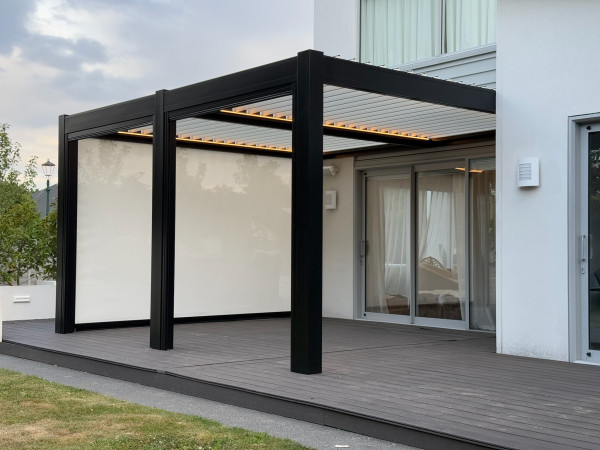
So, What Really Matters When Choosing a Louvre Roof?
Choosing a louvre roof shouldn't come down to finding the product with the longest list of superlatives.
“Strongest” isn't meaningful without context. A high wind-speed figure isn't useful if it doesn't tell you whether the solution is appropriate for your site. And “maintenance-free” may not provide the complete picture of what long-term ownership involves.
This is where Bask Louvre Roofs are different.
Bask Louvre Roof systems are designed and specified according to New Zealand wind zones, ensuring the roof is tailored to the conditions of your individual property. Backed by engineering design and the availability of Producer Statements (PS1s), Bask Louvre Roof systems can be specified to suit the wind zone and site conditions of individual projects, helping provide confidence throughout the design, consent and installation process.
Our approach is about helping homeowners make an informed choice, with a louvre roof considered in the context of the individual home and project.
Through our nationwide network of Bask installers, homeowners can find local expertise to help guide that decision.
Ultimately, choosing a louvre roof is about understanding how the integrated outdoor-living solution will work for your home, from its suitability for your site and environment through to maintenance and support.
Every home and site is different.
Talk to your local Bask installer today for advice tailored to your project.
Prev